
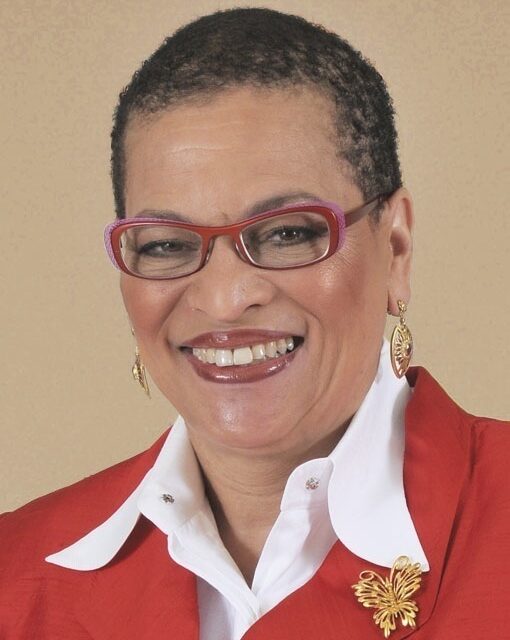
By Dr. Julianne Malveaux
Editorial
A neighborhood has not prospered if its people must leave to make room for prosperity.
That is the standard by which District 10 residents should judge every campaign promise, every development proposal, and every politician promising a brighter future. Brighter for whom? Who will own the homes? Who will get the contracts? Who will earn enough to live there? And who will discover, after generations of holding a community together, that they can no longer afford to belong?
The first two columns in this series examined concentrated political money and mayoral accountability. Now comes the question that matters beyond Election Day: Will District 10 residents shape their future, or merely receive notices explaining what powerful people have decided for them?
Bayview–Hunters Point deserves investment. Its residents deserve safe housing, reliable transportation, thriving businesses, clean surroundings, and public services that work. They deserve the amenities wealthier neighborhoods take for granted. Nobody should have to choose between neglect and displacement.
Yet Black communities are too often handed precisely that bargain. Endure inadequate investment, or welcome an expensive transformation whose benefits you cannot afford. Object to being pushed out, and somebody calls you an obstacle to progress. Displacement does not become progress because somebody puts a ribbon on it.
San Francisco’s own General Plan recognizes the danger. Its Bayview–Hunters Point policies identify housing affordability as a central concern and call for a major effort to provide affordable housing for existing residents to avoid displacement associated with new development. The city has articulated the principle. Where is the accountability for delivering it?
“Affordable” must mean more than a soothing adjective in a developer’s presentation. Affordable to whom? At what income? For how long? Can a retired resident remain? Can a working family pay rent without sacrificing groceries and medicine? Can the children of longtime homeowners afford to live where they grew up?
From my perspective, “affordable” should mean housing costs, including utilities, that consume no more than 30 percent of a household’s monthly income. The test is what existing District 10 families actually earn and can afford. Will the next supervisor fight for housing and subsidies that meet that standard—or settle for an “affordable” label on homes residents cannot afford? Count the people who can stay, not just the units somebody promises to build.
Preserving a community requires protecting tenants, helping homeowners maintain their property, and ensuring that public investment strengthens the people already there. A family’s home can represent decades of sacrifice and its principal source of wealth. Losing it can strip away both shelter and an inheritance. There is nothing visionary about a development strategy that leaves Black families with less.
Promises of jobs deserve the same scrutiny. Construction employment matters. So do apprenticeships and training. But residents deserve lasting employment, decent wages, and advancement. A temporary paycheck does not establish an economic future. Will developers commit to hiring local residents for permanent jobs, with decent wages and benefits? Will the supervisor demand enforceable commitments and public reporting on whether those promises are kept?
Who gets the contracts? Can local businesses compete? Do Black entrepreneurs have access to financing and commercial space? Will neighborhood merchants share in increased prosperity, or will higher rents drive them out after they helped keep the neighborhood alive? Will the supervisor fight for contract set-asides and help district entrepreneurs qualify for existing local business programs? How much of the money will actually reach businesses rooted in this community?
There is a difference between working on somebody else’s investment and owning a share of the wealth it creates. District 10 deserves wages and ownership opportunities. Otherwise, residents supply the labor while somebody else accumulates the assets. Calling that arrangement “inclusive” does not make it so.
Environmental safety must also be a condition of development. The Hunters Point Naval Shipyard is a Superfund site. In September 2024, the Environmental Protection Agency and Navy announced a cleanup plan for contaminated underwater sediment around the former shipyard. A cleanup plan is a step in a process. It is not a blanket assurance that every environmental concern has been resolved.
Residents deserve understandable information, rigorous oversight, meaningful participation, and accountability. They should not have to become technical experts to get straight answers about their surroundings. Promises of new homes and parks do not establish that the land is safe. Show the evidence. Answer the questions. Protect the people.
The next supervisor must defend these standards, even when developers, wealthy supporters, or the mayor would prefer otherwise. It is easy to claim independence during a campaign. Will the supervisor tell the mayor no? Will the supervisor vote against a wealthy supporter’s interests when residents deserve better?
Demand stronger affordability commitments. Insist on credible environmental oversight. Fight for local businesses and enforceable employment opportunities. Give residents a voice before decisions are made, while their participation can still change the outcome.
The next supervisor must also be available. Hold regular town halls where residents can ask questions and expect answers. Maintain accessible office hours at City Hall and in the district. Recruit qualified district residents for staff positions. Create internships for young people interested in politics, including opportunities to shadow the supervisor and learn how decisions are made. Young people deserve a pathway into power. Residents deserve access to the person exercising it. If a supervisor can find time for donors, that supervisor can find time for constituents.
Residents should measure performance through votes, budgets, negotiations, oversight, and accessibility. Keep the campaign promises. Compare them with the record. An election victory does not cancel the obligation to answer to the people. The supervisor owes them representation, not high-rolling donors.
A supervisor’s seat is a public trust. Its purpose is to serve the people whose lives are shaped by those decisions—including their ability to remain, thrive, and build wealth.
District 10 is not for sale. And the people who made it a community are integral, not disposable.
Dr. Julianne Malveaux
Economist/Author/Educator
Subscribe to my newsletter, The Malveaux Monitor.
The full series: Part One: A Half-Million-Dollar Question · Part Two: Throwing a Rock and Hiding
Related: Shamann Walton: Working Until the End, by Lee Hubbard.
Support 82 years of Black Bay Area journalism. Every story, editorial and Community Voice piece — $20 a year.