A federal appeals court let Mississippi’s ban on diversity programs in public schools take effect and took the case away from the judge who had blocked it, after finding his order included errors the court tied to artificial intelligence.
JACKSON, Miss. — The judge’s order cited a case that doesn’t exist. It quoted things nobody said. It named parties who weren’t in the lawsuit.
Now Mississippi’s ban on diversity, equity and inclusion programs in public schools can go into full effect.
The U.S. Court of Appeals for the Fifth Circuit last week vacated U.S. District Judge Henry Wingate’s rulings that had blocked parts of the law, and ordered the case reassigned to a different judge, according to the Associated Press. The appeals court called one of Wingate’s orders a “botch job” and said it contained artificial intelligence “hallucinations,” the AI term for invented facts.
What the law does
The law, passed in April 2025, bars public schools from requiring diversity training and from keeping DEI programs, courses and offices. It also bans discussion of a list of “divisive concepts” tied to race, sex, gender identity, sexual orientation, religion, ethnicity and national origin. Schools that break it could lose state funding.
Educators, students, parents and activists sued, arguing it violates their First and Fourteenth Amendment rights.
What can still be taught
The appeals court said the law does not reach scholarly work, student groups or creative work, and it rejected the argument that the law would ban teaching about civil rights, Dr. Martin Luther King Jr., the Ku Klux Klan, the Fourteenth Amendment or Juneteenth, the AP reported.
McKenna Raney, an attorney with the ACLU of Mississippi who represents the challengers, called it “heartening” that those classroom discussions are protected, but said the line on what else is allowed remains “murky.”
The AI problem
The challengers also lose the judge who had sided with them, over errors they didn’t make.
Courts across the country are wrestling with lawyers who file AI-written briefs full of fake cases. This is something different: errors in an order from the bench itself, in a case about what students are allowed to learn about race.
What’s next
The challengers have several weeks to ask the Fifth Circuit to rehear the case. The law takes effect seven days after that deadline passes, or seven days after a rehearing request is denied. The case now goes to a new district judge. The Mississippi Attorney General’s Office did not immediately comment.
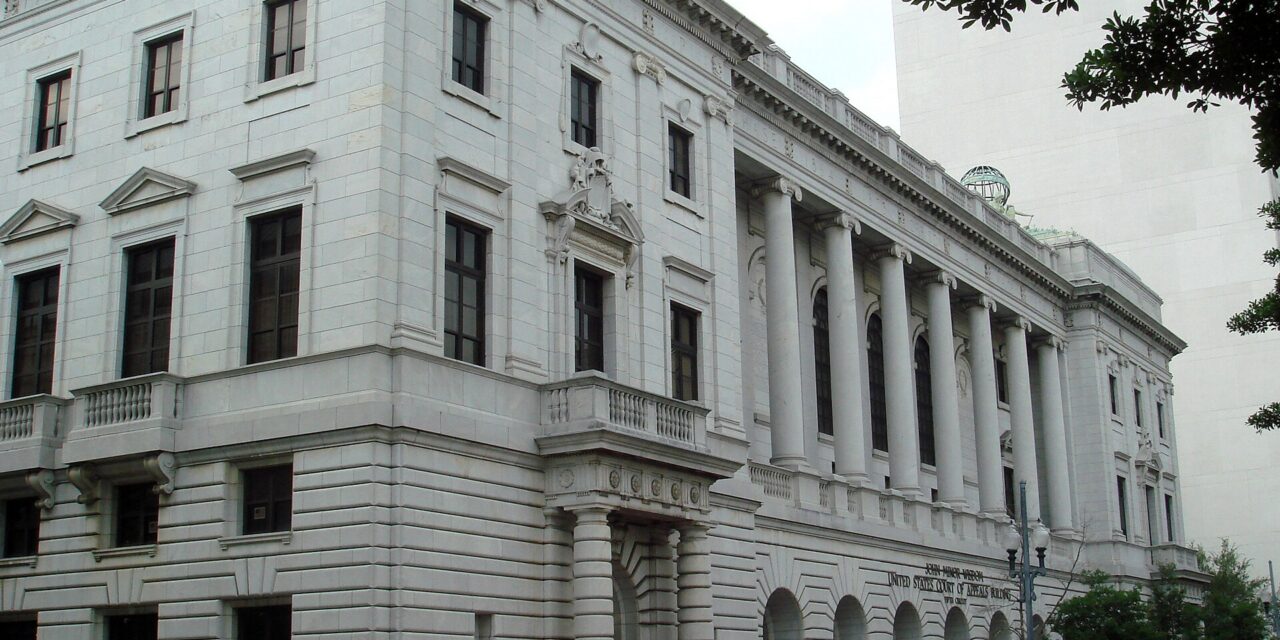
Source: the Associated Press. Photo: The U.S. Court of Appeals for the Fifth Circuit building in New Orleans. Photo by Bobak Ha’Eri via Wikimedia Commons, CC BY 3.0.
Support 82 years of Black Bay Area journalism. Our stories are free to read. A $20-a-year subscription keeps them coming.