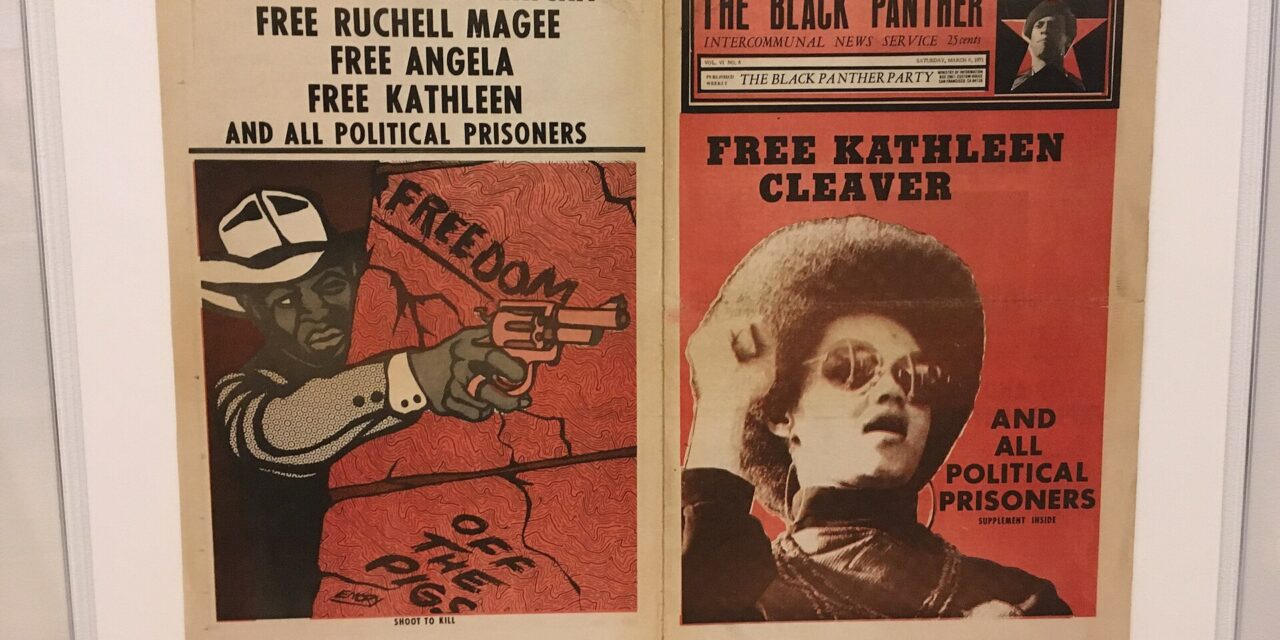
RICHMOND — James Wheaton is 83. He grew up in North Richmond in the 1940s and sold the Black Panther Party’s newspaper on its streets. He may be the last Richmond Panther still living in the city.
Richmond wants his story on the record. His and everybody else’s who was there, before there is nobody left to tell it.
The Richmond Black Historical Legacy Project, a local nonprofit, is working with the Richmond Museum of Culture and History to collect firsthand and secondhand accounts of the party’s Richmond chapter. The timing is no accident. The party turns 60 this year. It was founded in Oakland in October 1966.
A killing in North Richmond
Oakland gets the headlines in the Panther story. Richmond was there at the start.
On April 1, 1967, Denzil Dowell, 22, was shot several times and killed by a Contra Costa County deputy sheriff in North Richmond. Two weeks later a coroner’s jury called it a justifiable homicide. More than 1,200 people signed a petition asking for a grand jury investigation. The district attorney ignored it.
The Panthers took up the Dowell family’s cause. On April 18 they met with District Attorney John A. Nejedly to demand an investigation. The next day Huey P. Newton and residents met with Sheriff Walter Young, who refused to suspend the deputy. On April 22 the Panthers held a rally in North Richmond, armed and in uniform. Nearly 400 people came. Three days later the party put out the first edition of its newspaper.
On May 2, Bobby Seale led armed Panthers into the state Capitol in Sacramento to protest the Mulford Act, a gun bill written in answer to the party’s rise. Billy X Jennings, the party’s official archivist, has a simple read on that bill. It was about strength, he says. The Panthers had it, and it scared people.
Breakfast, escorts and a newspaper
The Richmond chapter formed about six months after the party did, with a headquarters on Bissell. Wheaton says it had about 10 official members. Oakland had as many as 1,000 at the late-1960s peak.
Small as it was, the chapter fed people. Its Free Breakfast program ran out of Elisabeth Missionary Baptist Church on Bissell Avenue. It held clothing and shoe drives and walked seniors where they needed to go. Jennings says the city later copied the escort program.
Kevin Wright, a Richmond poet, says his mother got food and clothing from the Panthers from the time she was 5 until she was 10. To her, he says, it was hope.
Wheaton joined at about 25. His best friend kept after him to come to meetings, and he had seen enough and felt enough to want things to change. He stayed about two years, until the party faded out in Richmond around 1971. Then he went to Contra Costa College and UC Santa Cruz. The way he tells it, the Panthers’ idea of freedom started with a family being able to eat.
The people who remember
Robert Turner, 77, was born and raised on Fourth Street, a block from where the party got its start in Richmond. He retired from the West Contra Costa Unified School District and mentors kids at Helms Middle School. He remembers the police in Richmond as worse than the police in Oakland.
Betty Ubiles, 75, was a teenager then. Her brother was a member, and she was in the Black Student Union at Richmond High School. A lot of the old members have moved to Sacramento, Antioch and farther. Some have died. The memory, she says, stayed in Richmond.
At a recent 60th anniversary celebration at the Shields-Reid Community Center, a camera rolled in a back room, recording oral histories while the party’s old newspapers hung out front. The group plans another gallery and conversation in the new year and hopes to bring more former Richmond members home for it.
Ubiles has a message for anybody holding a piece of that history. Do not leave it sitting on a shelf.
Have a story about the Richmond chapter of the Black Panther Party? Contact Evelyn Santos at the Richmond Museum of Culture and History, evelyn@richmondmuseum.org.
Support 82 years of Black Bay Area journalism. Our stories are free to read. A $20-a-year subscription keeps them coming.