Gov. Gavin Newsom went to Washington this month and said something a lot of families already know.
“Too many boys are falling behind in school. Too many men are disconnected from work, from friendships, from people they can turn to. Too many are losing their lives,” the governor said. “This is a crisis of isolation and opportunity, but its effects are not isolated — everyone feels it.”
He was speaking at the first summit of the American Institute for Boys and Men, in a conversation with its founder, Richard V. Reeves.
“It is up to us to make sure these young men are seen, supported, and connected before a crisis becomes a tragedy,” Gov. Newsom said.
What California is doing
- Mentors. The state’s Men’s Service Challenge set out to sign up 10,000 men as coaches, tutors, mentors and community leaders. More than 11,000 have stepped up.
- Mental health. Young men’s use of Soluna, the state’s free online behavioral health tool, has nearly doubled since September 2025, the administration said.
- Fathers. More dads are using BrightLife Kids, a free state program for parents of younger children.
- Schools. The state’s school-linked behavioral health program has reached more than 77,000 students.
Closer to home
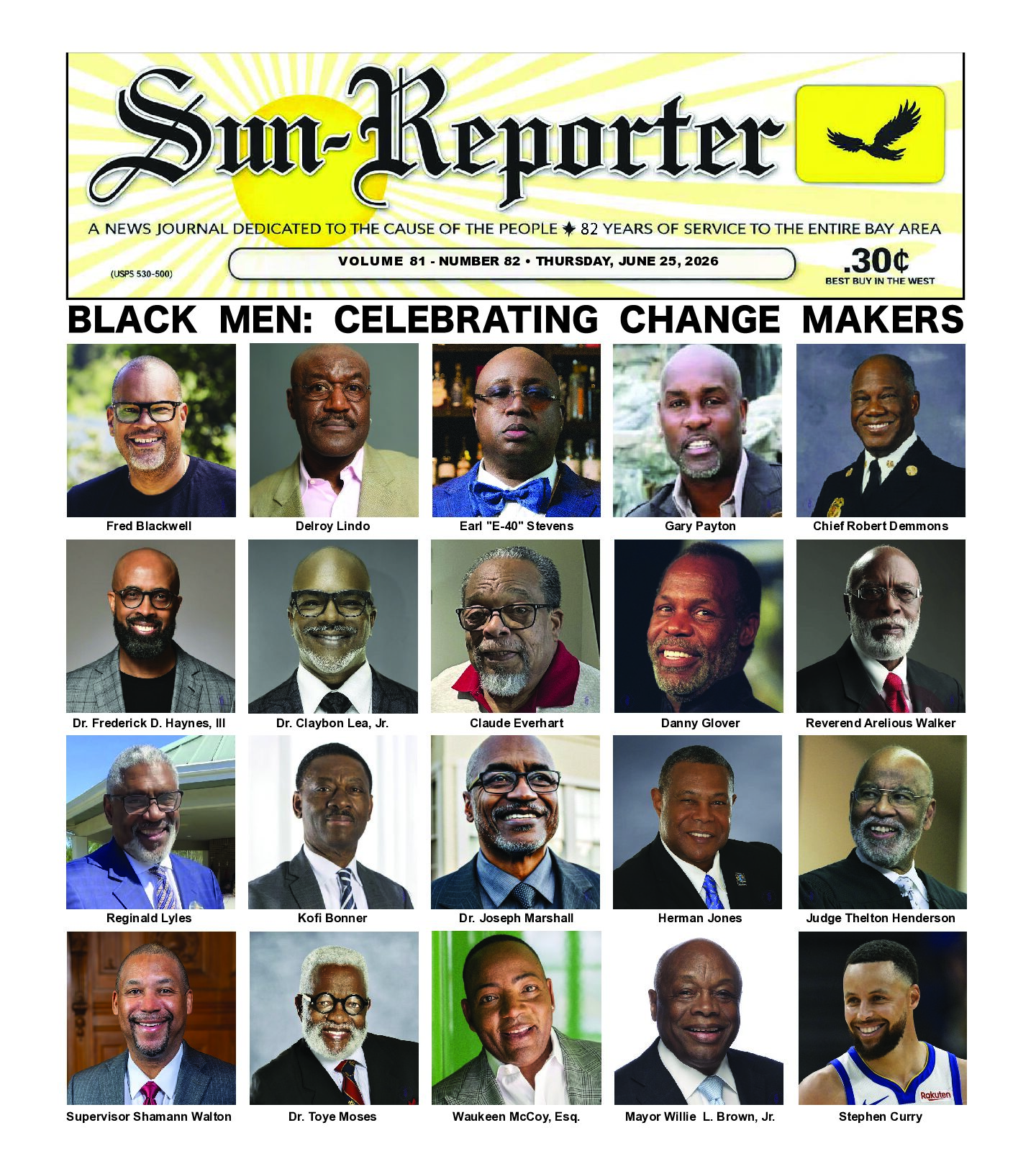
This community has been doing that work for a long time, with or without a summit. In September, The Sun-Reporter honored a room full of men who coach, teach, organize and mentor at its Black Men: Celebrating Change Makers celebration at Third Baptist Church. You can watch the full program here.
Also on the trip
While in Washington, Gov. Newsom met with House Democratic Leader Hakeem Jeffries on Nov. 17 to press for $12.98 billion in federal recovery money for communities hit by the January 2025 Los Angeles wildfires. He is asking Congress to approve it before lawmakers leave in December.
Ten thousand mentors was the goal. Eleven thousand showed up. There is room for a few more.
This story is based on reporting by Bo Tefu of California Black Media.
Support 82 years of Black Bay Area journalism. Our stories are free to read. A $20-a-year subscription keeps them coming.