
By Joe W. Bowers Jr. | California Black Media
Democratic gubernatorial candidate Xavier Becerra met with Black elected officials and faith, labor, civic and community leaders in South Los Angeles on Oct. 15, outlining his priorities for working families, education, housing and health care. He also pledged to defend diversity, equity and inclusion (DEI) programs against federal opposition and tie state homelessness funding to results.
Los Angeles County Supervisor Holly Mitchell introduced Becerra, citing his service in the state Assembly, Congress, as California attorney general and as U.S. secretary of health and human services. She said his record of challenging the Trump administration would be important as California confronts federal policy changes.
“We need people who have walked where we have walked and understand the communities that we all live in, come from, and represent,” Mitchell said.
Becerra defended DEI programs as essential to expanding opportunity. Recalling his upbringing as the son of working-class immigrants who never attended college, he said too many Californians work hard but remain overlooked.
“A lot of folks don’t see them because they’re working so hard; they’re keeping their heads down. But we see them, and that’s why we make this fight,” he said.
Becerra also opposed voter identification requirements, arguing that they create barriers to voting.
“If there’s a fight for that diversity, that strength, that inclusion, that equity, count me in, and let me use the governor’s office to make it clear,” he said.
Asked about his first priorities as governor, Becerra identified housing and health care.
He said more than 40,000 housing units are ready for construction but remain stalled by financing shortages.
Becerra pointed to Proposition 1, a housing bond measure on the November ballot, as a potential source of financing.
“Prop 1 would give us the money to help start getting those moving,” he said. “And the more you build, the more you relieve the pressure, the demand for housing, which means you can probably see the price stabilize as well.”
On homelessness, Becerra warned that cities and counties should not expect continued state funding without measurable progress.
“We will demand accountability when it comes to homelessness,” he said. “I’m not willing to let $1 from the state, from taxpayers, go to a city or a county unless they can show me how they’re going to use the dollar and what the results will be.”
He called for temporary shelter paired with mental health and substance use treatment, while acknowledging that local governments control decisions about encampments and public streets.
Becerra also emphasized preventing homelessness before families lose their housing because of layoffs or medical emergencies.
“It costs way more money to pull you off the streets, to get you standing up, to get you sober, than it does to keep you in a home you’re already in,” he said.
Becerra warned that federal Medicaid reductions could threaten health coverage for millions of Californians while destabilizing hospitals, clinics and medical practices.
“If these families lose their insurance and still go in for care, now the doctors and the hospitals won’t get paid,” he said, warning that providers could eventually close or reduce services. “I want to make sure neither the patients nor the providers feel like Trump’s cuts are going to undermine our health care system.”
He said he has begun discussions with health care providers and insurers about a response but did not outline a financing plan.
Questions about technology prompted Becerra to address surveillance, artificial intelligence and privacy protections.
Asked about license plate recognition cameras potentially being used to track people by race, immigration status or protest activity, he called for safeguards and consequences for misuse.
“Once you give up your privacy, you can’t get it back,” he said.
On artificial intelligence (AI), Becerra expressed concern that even developers cannot fully predict how their systems will behave.
“It’s hard to believe that you have safety when even the people who produce the technology can’t tell you where it’s going to go,” he said.
He called for protections for children, workers and public safety, including exploring government authority to shut down dangerous AI systems.
Becerra also criticized federal immigration enforcement policies and called for comprehensive reform, recalling his unsuccessful efforts to overhaul the system during his 24 years in Congress.
“We’ve known that our system for immigration has been broken for a long time,” he said.
He said uncertainty affects immigrant families and employers, particularly farmers who depend on immigrant labor.
On education, Becerra emphasized early childhood learning, stronger academic standards and experienced teachers in struggling schools.
“Keep your taxpayer dollars in our public community schools,” he said. “Don’t let those tax dollars go to for-profit private schools first, because it’s already tough enough as it is.”
He argued that achievement gaps must be addressed before kindergarten, with expanded early learning opportunities and intensive tutoring for students who fall behind.
“Too many of our kids are starting even kindergarten, and they’re not ready to learn,” he said. “And is it surprising that by the third grade they’re not reading or doing math at grade level?”
Becerra also challenged schools to stop advancing students who lack grade-level skills.
“We have to start to tell our schools, you’re not going to be allowed to just pass a kid on just because they’re a year older,” he said.
He called for assigning experienced teachers to schools with the greatest academic needs while working with unions on compensation for additional work.
“You can’t flood them with the least experienced teachers,” he said. “You have to put skilled, ready teachers who can provide the training that a child who may be starting a little behind will need.”
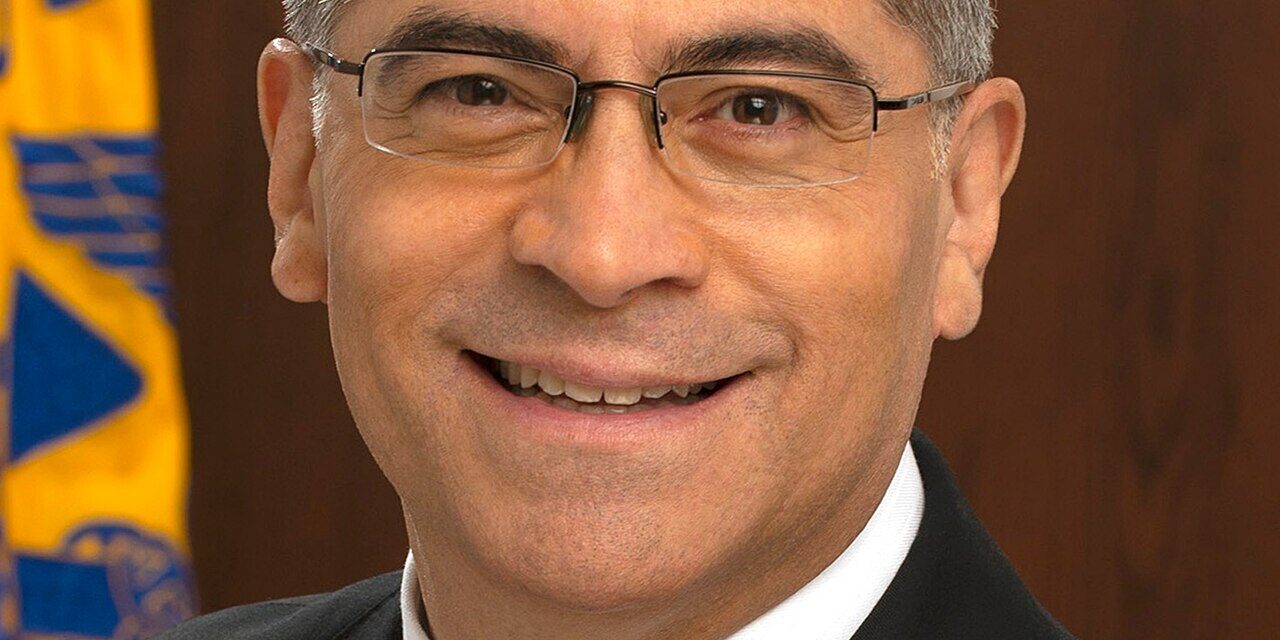
Photo: Xavier Becerra, official U.S. Department of Health and Human Services portrait. Via Wikimedia Commons, public domain.
Support 82 years of Black Bay Area journalism. Every story, editorial and Community Voice piece — $20 a year.