SAN FRANCISCO — Carver Elementary in the Bayview has 101 students. If San Francisco assigned every child to the school nearest home, a new analysis says, it could have close to 780.
That is where the city is headed. On Oct. 13, the Board of Education voted 5-2 to replace the elementary school lottery with a neighborhood-based system. Every family would be guaranteed a seat at the school assigned to its home address. Citywide programs such as language immersion would stay open by application.
The vote did not finish the job. The board is expected to take a final vote on the policy in April. The new system would apply to students enrolling for the 2028-29 school year. Between now and then, the district says it will redraw attendance boundaries and study how many seats each school can hold.
For families in the Bayview, Hunters Point and Visitacion Valley, the months ahead are the whole story.
The southeast stands to gain the most students
The San Francisco Standard ran the numbers last week. It estimated how big each school would be if its students matched the children who live in its attendance area. The schools that would grow most are concentrated in the south and southeast of the city.
- Carver: from 101 students to about 780
- Visitacion Valley Elementary: from 199 to about 700
- Charles Drew: from 218 to about 706
- Malcolm X Academy: from 87 to about 241
Nine of the 10 schools that would shrink most are on the west side. Gordon Lau and West Portal would each lose roughly half their students.
The estimates come with real limits. They scale down 2016 district projections, assume every neighborhood lost children at the same rate and ignore building size. Carver’s projected enrollment is bigger than its building. And no chart can say whether Bayview families who now leave the neighborhood for school would stay.
Small schools, bigger checks, no booster clubs
Because they are so small, Carver and Malcolm X Academy each get about $20,000 per student from the district, roughly double the citywide median of about $9,300. If they fill up, that per-student figure will not hold.
Private money runs the other way. Parent groups reported $8.9 million in their latest tax filings, the Standard found, and two-thirds of it went to 18 schools where fewer than a third of students are low-income. Nine of the 10 schools projected to gain students report no parent-group money. Nine of the 10 projected to lose students do.
That is the gap the next policy has to close.
The integration question is back on the table
San Francisco has fought over this before. A 1971 court order brought busing. A 1999 settlement barred assigning students by race. The lottery came in 2011. Today, the Standard reported, 57% of the city’s schools have a single racial group above 45% of students.
The district is now dropping racial integration as an explicit goal. The two commissioners who voted no, Alida Fisher and Supriya Ray, warned about what that means. “Neighborhood schools, by definition, will be segregated schools,” Fisher said, as reported by Mission Local.
Commissioner Matt Alexander, who moved the resolution, framed it around the children whose families never work the lottery. “We keep talking about choice, but what about the kids whose families, for whatever reason, aren’t making those choices?” he said.
The analysis also cuts against easy assumptions. At Cobb Elementary, 44% of students are Black, while 62% of the children living nearby are white. If schools matched their neighborhoods, the Standard found, the number of schools where one group is 60% or more of students would fall from 20 to six.
The district has about 14,000 empty seats. How it handles them once the new system shows which neighborhoods need their schools most will matter as much as the vote itself.
District 10’s next supervisor will inherit the fight
Voters choosing a District 10 supervisor on Tuesday are hearing three different answers. Mission Local asked the candidates whether they support the board’s decision.
- J.R. Eppler said yes. “Every neighborhood deserves a fully resourced school,” he wrote.
- Dion-Jay “DJ” Brookter said no. “Under current conditions, I oppose neighborhood-based school assignments,” he wrote.
- Theo Ellington, who was born and raised in the Bayview, said maybe. “My fear as a parent is that neighborhood schools will deepen inequities if the proper resources are not allocated,” he wrote.
Mission Local noted that southeast schools have a history of underfunding and segregation, and that Willie Brown Middle School has become in demand citywide since the lottery began.
The board has promised a neighborhood school for every family. In the Bayview, the question is whether it will be a school worth staying for.
Get involved: SFUSD says it will hold community engagement sessions before the board’s final vote, expected in April. Details are at sfusd.edu.
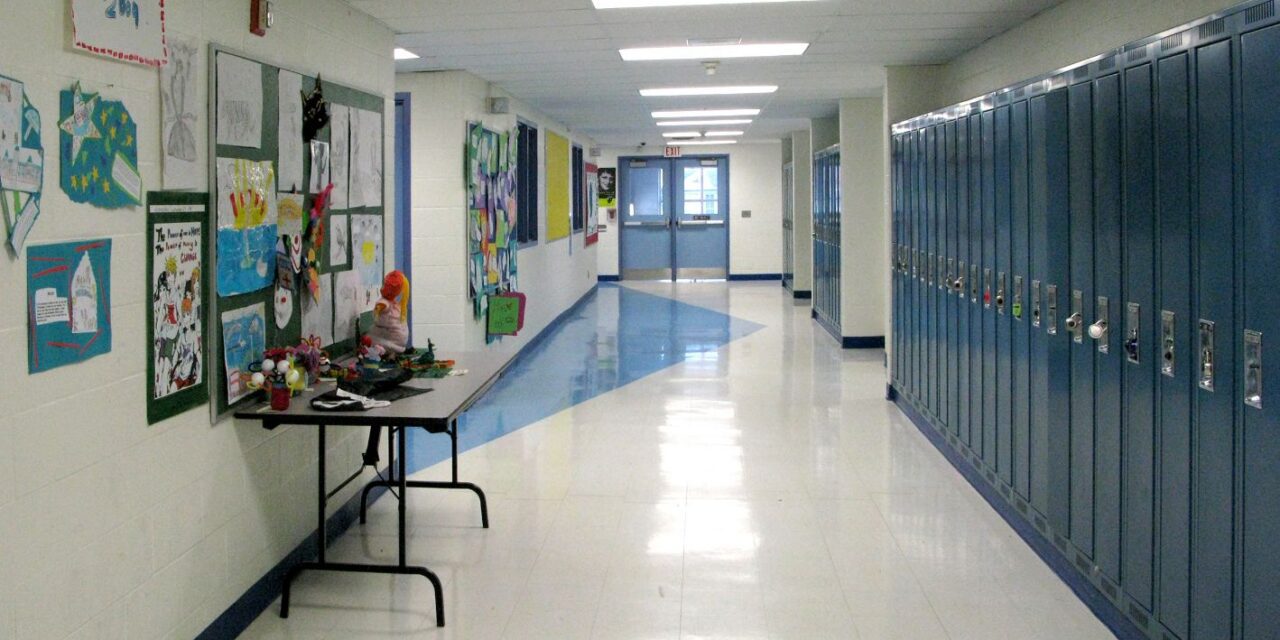
Photo: Wikimedia Commons, public domain. This report draws on SFUSD, the San Francisco Standard, KQED and Mission Local.
Support 82 years of Black Bay Area journalism. Every story, editorial and Community Voice piece — $20 a year.